

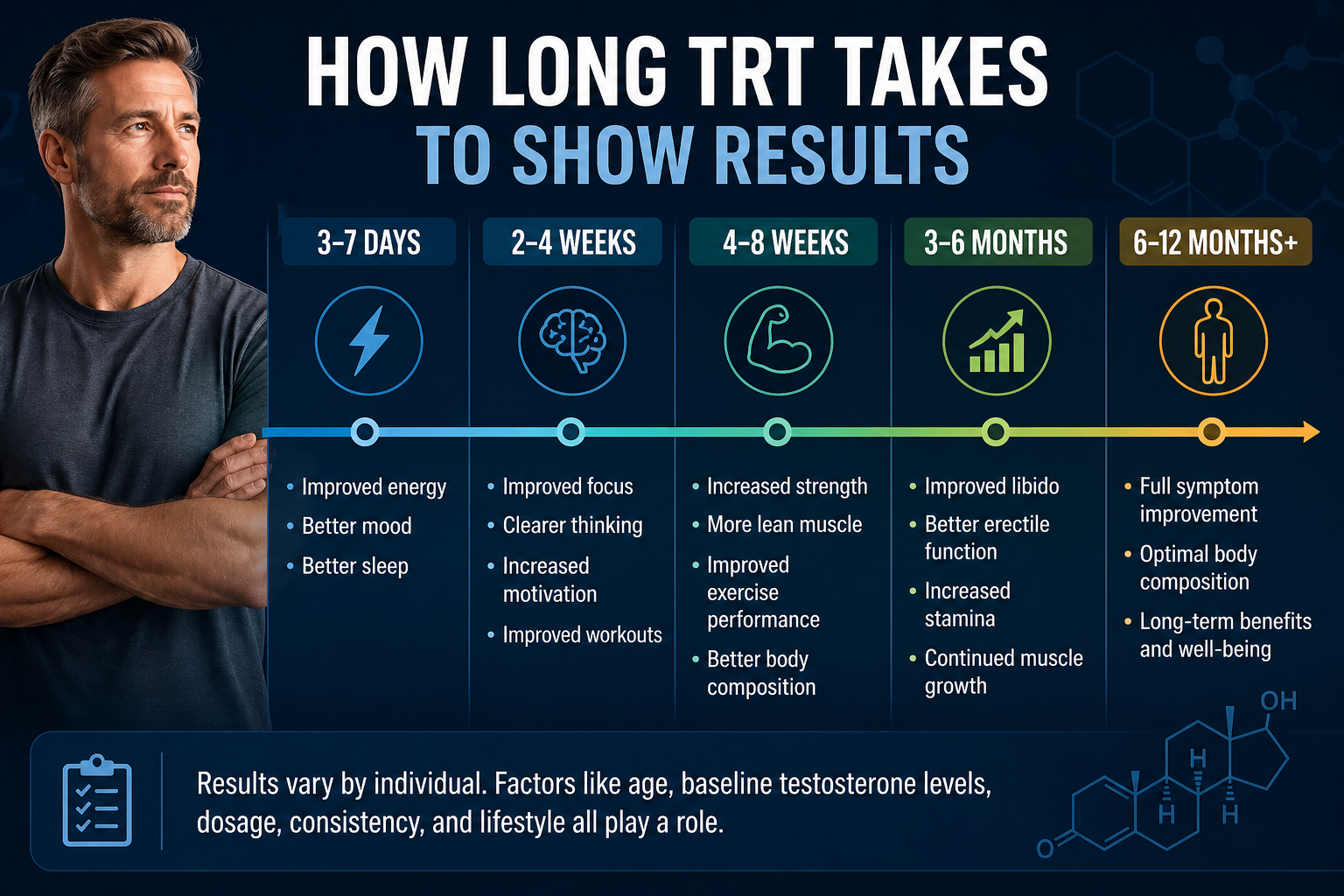
One of the first questions men ask after starting testosterone replacement therapy is: when will I actually feel different? It’s a fair question — especially when low testosterone has been quietly affecting your energy, mood, sleep, and drive for months or even years. Understanding how long TRT takes to show results helps you set realistic expectations, stay consistent with your protocol, and recognize the early signs that the treatment is doing its job.
At Men’s Health Solutions, we’ve helped over 5,000 men in Indianapolis reclaim their energy, drive, and confidence through personalized testosterone therapy. What we’ve seen consistently is that TRT works — but it works on a timeline that unfolds in stages. Some changes come within the first few weeks. Others take three to six months to fully emerge. This guide walks through what to expect at each phase, what factors influence your individual response, and how to know your treatment is on track.
Important note: This article is for informational purposes. TRT is a medical treatment that should only be initiated and monitored by a qualified healthcare provider. Individual results vary, and your protocol should be tailored and adjusted based on your lab work and clinical response.
TRT Results Follow a Predictable Timeline — But Individual Response Varies
Testosterone replacement therapy doesn’t flip a switch — it gradually restores your hormone levels to a healthy physiological range and allows your body’s systems to respond over time. The general timeline is well-documented in the clinical literature, but how quickly and clearly you experience each benefit depends on several personal factors: your baseline testosterone level, age, body composition, the delivery method used, and how your individual physiology responds to the therapy.
Men who start TRT with very low baseline levels often notice more dramatic early improvements than those with borderline low testosterone. That’s not a sign that one group is responding better — it reflects the larger gap being closed. Either way, the full picture of TRT’s benefits takes time to develop, and patience with the process is part of what makes it work.
Weeks 1–4: The Early Phase — What to Expect First
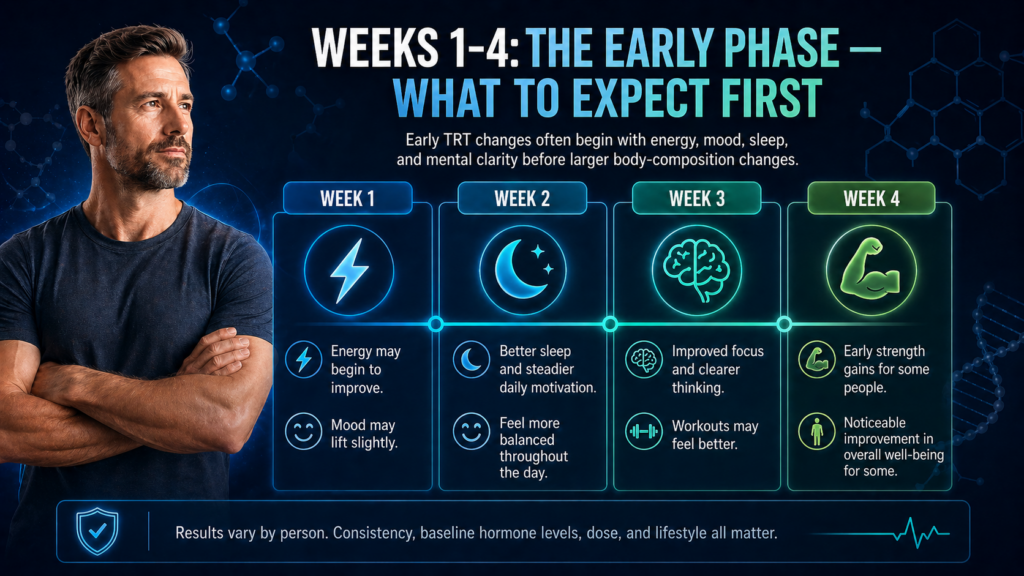
The first month of TRT is when your body begins adjusting to rising testosterone levels. For most men, the earliest noticeable changes involve sleep and mood rather than physical performance or libido. This makes sense physiologically — the nervous system and sleep architecture respond relatively quickly to hormonal shifts, while muscle tissue and metabolic changes take longer to accumulate.
Common early changes in weeks one through four include:
- Improved sleep quality: Many men report falling asleep more easily and sleeping more deeply within the first two to three weeks. Restorative sleep has its own downstream effects — better mood, sharper thinking, and more consistent energy during the day.
- Mood stabilization: Irritability, low motivation, and a general sense of flatness are classic symptoms of low testosterone. Some men notice a lift in their baseline mood and a reduction in anxiety within the first few weeks of treatment.
- Early energy improvements: A modest increase in daytime energy and reduced afternoon fatigue is common in the first month, though the more significant energy gains tend to build through weeks four to twelve.
- Initial libido changes: Some men notice early shifts in sex drive, though for many this benefit becomes more pronounced in the weeks that follow.
It’s also worth noting that some men experience a brief adjustment period in the first week or two — minor fluctuations in mood or energy as the body adapts to changing hormone levels. This is normal and typically resolves quickly.
Weeks 4–12: The Mid-Phase — When Most Men Notice Meaningful Change
The four-to-twelve-week window is when the majority of Men’s Health Solutions patients begin reporting that they “feel like themselves again.” Testosterone levels are stabilizing toward their target range, and the body’s systems — libido, energy metabolism, muscle response — have had enough time to respond meaningfully.
Benefits that typically become more prominent during this phase include:
- Libido and sexual function: Improved sex drive and sexual performance are among the most frequently reported TRT benefits in this window. For men whose low testosterone was a significant contributor to erectile dysfunction, TRT can begin producing noticeable improvements here — though Men’s Health Solutions also offers targeted ED treatments for cases where additional support is needed.
- Physical energy and endurance: The chronic fatigue that comes with low testosterone — the kind that sleep doesn’t fix — begins to lift. Men report being able to push harder in workouts and recover more effectively.
- Body composition shifts: Testosterone plays a key role in muscle protein synthesis and fat metabolism. As levels rise, men often begin noticing improvements in muscle tone and a gradual reduction in abdominal fat, particularly when combined with consistent exercise and a supportive diet.
- Mental clarity and focus: Brain fog, difficulty concentrating, and poor memory are all associated with low testosterone. Many men describe a noticeable improvement in cognitive sharpness during this phase.
- Motivation and drive: The psychological dimension of testosterone — confidence, competitive drive, and the motivation to engage with life — often becomes noticeably stronger in this window.
This is also typically when your first follow-up lab work will be scheduled at Men’s Health Solutions — usually around week six to twelve. That bloodwork gives your provider the data needed to confirm that your testosterone levels are in the target range and to make any dose adjustments before moving into the long-term phase of treatment.
Months 3–6: The Full Effects of TRT Begin to Emerge
By the three-to-six-month mark, most men on a well-managed TRT protocol are experiencing the full benefit profile of the therapy. Hormone levels have stabilized, the dosing protocol has been refined based on lab data, and the body has had time to adapt at a cellular and tissue level.
Benefits that continue to develop or reach their full expression in this phase include:
- Sustained body composition changes: Muscle mass gains and fat loss — particularly visceral abdominal fat — become more pronounced as the cumulative effect of elevated testosterone on metabolism and muscle protein synthesis accumulates over months.
- Bone density: TRT has a well-documented effect on bone mineral density, which improves gradually over months and years of treatment. This benefit isn’t felt directly but is significant for long-term health, particularly for men over 40.
- Cardiovascular markers: Some men see improvements in cholesterol profiles and red blood cell parameters, though these markers require monitoring as part of routine follow-up care.
- Emotional baseline: The mood, confidence, and emotional resilience improvements that began earlier often deepen and stabilize into a new normal — a consistent sense of wellbeing that many men describe as “getting back to who I used to be.”
What Factors Affect How Quickly You See TRT Results?
Understanding the timeline is useful, but it’s equally important to understand why two men on the same TRT protocol may have noticeably different experiences in the early weeks. Several variables influence the speed and degree of your response:
- Baseline testosterone level: The lower your starting testosterone, the more room there is for improvement and often the more dramatically early benefits are felt.
- Age and overall health: Younger men with otherwise good metabolic health tend to respond more quickly. Older men or those with underlying conditions like obesity or type 2 diabetes may have a more gradual response.
- Delivery method: Testosterone injections, topical gels, subcutaneous pellets, and other delivery formats have different pharmacokinetic profiles — meaning they raise and maintain testosterone levels at different rates and steadiness. Your provider will recommend the method best suited to your lifestyle and clinical picture.
- Diet and exercise: TRT works best when supported by a healthy lifestyle. Regular strength training in particular amplifies the muscle-building and metabolic effects of testosterone. Men who make lifestyle changes alongside starting TRT typically see faster and more dramatic results.
- Protocol optimization: The initial dose isn’t always the final dose. Dialing in the right protocol based on follow-up lab work takes a few months — and men whose protocols are optimized earlier tend to see benefits consolidate more quickly.
How Do You Know TRT Is Working?
There are two reliable ways to assess whether your TRT is working: how you feel, and what your labs show. Both matter.
From a subjective standpoint, the clearest signs that TRT is working include steady improvement in energy and sleep, a returning sense of motivation and confidence, improved libido, better physical performance and recovery, and a general reduction in the symptoms that brought you in — fatigue, irritability, brain fog, and low drive.
From a clinical standpoint, your follow-up blood work should show testosterone levels within your target therapeutic range. Your provider will also monitor hematocrit, PSA (for men over 40), and other relevant markers to ensure the therapy is safe and well-tolerated. At Men’s Health Solutions, monitoring and protocol refinement are built into our TRT program — your results are tracked, not assumed.
If you’re several weeks into TRT and not noticing any changes, that’s important information — not a reason to give up. It may mean your dose needs adjustment, your delivery method isn’t optimal for your physiology, or there’s another factor affecting your response. The right conversation to have is with your provider, not with yourself.
Frequently Asked Questions About TRT Results and Timeline
How long does TRT take to start working?
Many men notice initial changes — improved sleep, a modest energy lift, or a shift in mood — within the first two to four weeks of TRT. More significant benefits, including improved libido, better body composition, and stronger mental clarity, typically become noticeable between weeks four and twelve. Full effects generally emerge over three to six months as hormone levels stabilize and the protocol is refined.
What are the first signs that TRT is working?
The earliest signs are often improved sleep quality, a more stable mood, and a modest increase in daytime energy. These changes can appear within the first two to four weeks. Libido improvements and physical changes like increased muscle tone and reduced fatigue tend to follow as treatment progresses through the first three months.
Why does TRT take several months to show full results?
Many of the body’s systems — muscle tissue, bone density, metabolism, and libido — respond gradually over weeks and months as hormone levels stabilize. Dosing adjustments based on follow-up lab work also take time, and the final optimized protocol may not be in place until two to three months into treatment. The full benefit profile of TRT is a cumulative, progressive process.
Does everyone respond to TRT at the same rate?
No. Individual response varies based on baseline testosterone levels, age, overall health, body composition, and delivery method. Men with very low baseline testosterone often notice more dramatic early improvements. Your provider will monitor lab results and adjust your protocol over time to optimize your individual response rather than applying a one-size-fits-all approach.
How will I know if my TRT dosage needs to be adjusted?
Follow-up blood work — typically at six to twelve weeks after starting TRT — gives your provider the data needed to confirm that your levels are in the target range. If your testosterone is outside that range, or if you’re not experiencing expected benefits, your dose or delivery method may be adjusted. Protocol refinement is a normal and expected part of managed TRT care.
The Timeline Is a Guide — Your Provider Makes It Personal
The TRT timeline outlined here reflects what the majority of men experience on a well-managed protocol. But the most important factor in how quickly and fully you see results isn’t the calendar — it’s the quality of your clinical care. A personalized protocol, attentive follow-up, and dosing adjustments based on your actual lab work make the difference between a treatment that works adequately and one that genuinely transforms how you feel.
At Men’s Health Solutions, our approach to testosterone therapy is built around your individual results — not a generic template. If you’re experiencing symptoms of low testosterone in Indianapolis and want to understand what TRT could do for you, we’d be glad to help. Call us at (317) 975-3945, email [email protected], or schedule your visit online to get started.